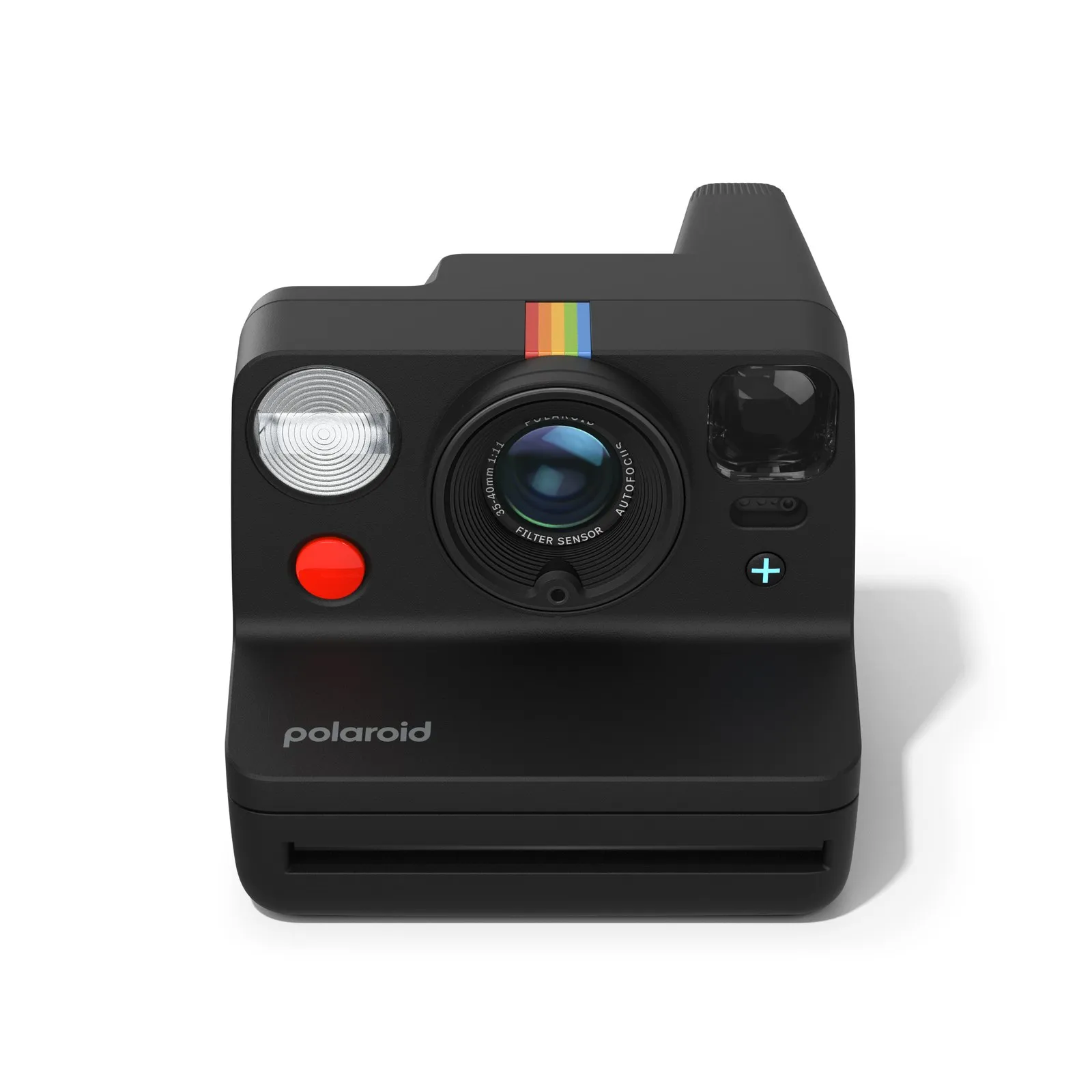
Polaroid Now+ Generation 3
Square instant prints. Creative controls stay optional, not required.
Square instant prints with optional manual controls via app — creative range the Instax Mini 12 doesn't have, at the cost of pricier, less predictable film and a slower 10–15 minute develop time.
Pros & cons
- Square-format prints with a two-lens autofocus system and five swappable lens filters, according to manufacturer specifications
- Rechargeable battery rated for up to 15 film packs per charge
- Companion app is optional — manual aperture, remote shooting, and light painting are extras, not requirements to take a photo
- Built-in tripod mount; made from 40% recycled plastics per the manufacturer
- i-Type film is expensive, and multiple published reviews describe exposure as inconsistent shot to shot
- Performs poorly in low light — indoor shots commonly come out dark, according to reviewers
- 10–15 minute development time is much slower than the Instax Mini 12's roughly 90 seconds
- Some reviewers describe the plastic body as feeling cheap for the price
How it works
According to manufacturer specifications, the Now+ uses a two-lens autofocus system across two fixed focus zones and develops square-format i-Type or 600 film over 10–15 minutes after the shutter. Five physical lens filters clip onto the front for creative effects, and a Bluetooth companion app adds aperture priority, remote shooting, and light-painting modes — none of which are required to just point and shoot.
The real cost is the film
A pack of 8 i-Type exposures is a genuine ongoing cost, and multiple published reviews describe results as inconsistent — exposure can vary shot to shot, and the camera reportedly struggles in low light. Budget for film as a recurring expense, not a one-time purchase, and expect some shots to miss.
Who should buy it
The Now+ suits anyone who wants the classic square Polaroid format specifically, plus the option — not the obligation — of manual creative control through the app. The included lens filters and light-painting mode give it more creative range than a pure point-and-shoot instant camera.
Who should skip it
Anyone who wants the fastest possible print should look at the Fujifilm Instax Mini 12 instead — it develops in about 90 seconds versus the Now+'s 10–15 minutes, and its film costs less per shot. Anyone who wants consistently predictable exposure should also look elsewhere; multiple reviewers report inconsistent results even on the current generation.
The bottom line
A square-format instant camera with real creative range if you want it, and a fully optional app so you're never forced to use it. The tradeoffs are real: pricier, sometimes-unpredictable film, and a slower print than Instax's format.
Vs. closest alternative
Both put a physical photo in your hand within minutes, no phone required to actually shoot. The Instax Mini 12 is faster (about 90 seconds versus 10–15 minutes) and its film costs less per shot, making it the simpler, cheaper choice. The Now+ trades that speed and cost for the classic square Polaroid format, swappable lens filters, and an optional app for manual creative control. Choose the Instax Mini 12 for the cheapest, fastest instant prints; choose the Now+ if the square format and creative extras matter more to you than cost per shot.
A square-format instant camera with real creative range if you want it — and a fully optional app, so you're never forced to use it.
FAQ
Do I need the Polaroid app to use this camera?
No. The app adds optional extras — aperture priority, remote shooting, and light painting — but basic point-and-shoot photography works entirely on the camera itself, according to manufacturer specifications.
How much does the film cost?
A pack of 8 color i-Type exposures is a genuine ongoing cost, and multiple reviewers note it's pricier than rival instant-film formats — budget for film as a recurring expense, not a one-time purchase.
How does it compare to the classic Instax format?
The Now+ produces the larger, classic square Polaroid print rather than the smaller Instax rectangle, and develops more slowly (10–15 minutes versus about 90 seconds). Which you prefer comes down to format and how much you value speed versus the classic Polaroid look.