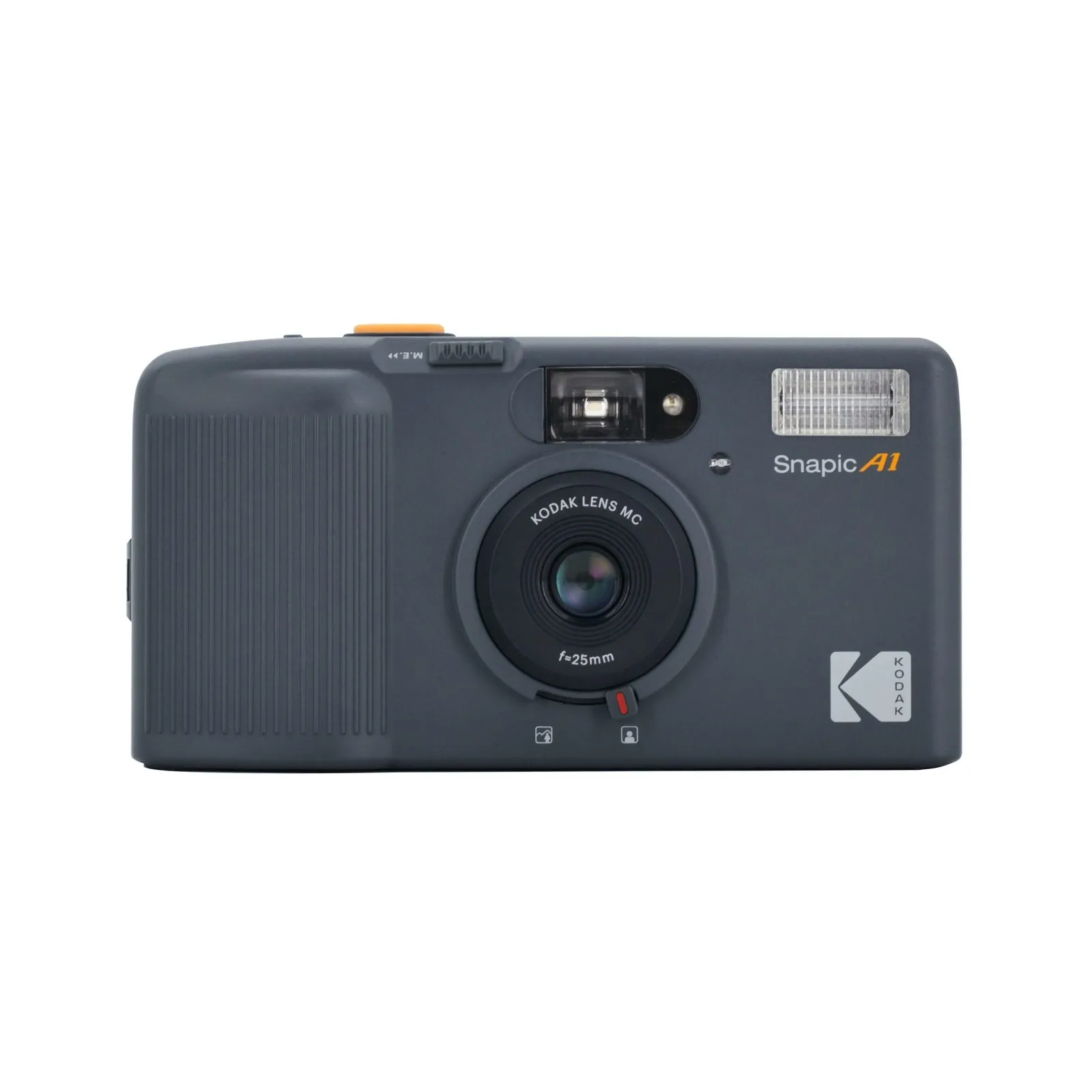
Kodak Snapic A1
A reusable 35mm film camera with a status display — never a photo preview.
The purest screen-free camera here — nothing to preview, nothing to check, and no results until the roll comes back from developing.
Pros & cons
- No preview screen of any kind — the LCD only shows frame count, battery level, and mode, never an image, per manufacturer specifications
- A 3-element glass lens and automatic flash/exposure make it more capable than most reusable film cameras at this price
- Automatic film wind and rewind — no manual crank required
- A double-exposure mode adds a deliberate creative option beyond standard point-and-shoot
- Film and the AAA battery are sold separately — budget for both before the camera arrives, and for developing each roll afterward
- You don't see any results until the roll is finished and processed, which can be days or weeks — a real commitment compared to instant formats
- Made by RETO Production Ltd. under a Kodak brand-licensing agreement, not manufactured by Kodak itself, according to reporting on the product's launch — worth knowing if the Kodak name is part of the appeal
How it works
The Kodak Snapic A1 is a point-and-shoot 35mm film camera with a 3-element glass lens, a fixed 1/100s shutter speed, and a fixed f/9.5 aperture, according to manufacturer specifications. A switch on the front toggles between two focus zones — standard and close-up — and the camera handles film winding, rewinding, and flash automatically. A small LCD on the back shows the frame count, battery status, and selected mode — never the photo itself, because there is no photo to show until the roll is developed.
Cost, and the wait for results
Film and the AAA battery are sold separately from the camera, and a standard roll of 35mm film (commonly 24 or 36 exposures) needs to be developed afterward, which adds both a cost and a delay before you see any photo. That delay is the entire point for some buyers and a real drawback for others — there is no in-between with a film camera. Bundles that include a starter roll of film are also sold alongside the standalone camera if you'd rather not source film separately for the first roll.
Build and brand
The Snapic A1 is made by RETO Production Ltd., a Hong Kong-based camera maker, under a marketing and brand-licensing agreement with Kodak, according to industry reporting on its late-2025 launch — it is not manufactured by Kodak's own camera division. That's not a knock on build quality, which reviewers have generally described as solid for the price, but it's a distinction worth knowing if part of the appeal is the Kodak name specifically.
Who should buy it
The Snapic A1 suits people who want the most complete break from anything screen-adjacent — not just no screen on the device, but no way to see a result at all until a roll is finished and developed. It rewards shooting deliberately, since there's no instant feedback loop to lean on.
Who should skip it
Anyone who wants to see their photos sooner than "whenever the roll gets developed" should look at the Fujifilm Instax Mini 12 instead — it keeps the no-screen, no-app principle while still producing a print in about 90 seconds. Buyers who specifically want the Kodak name to mean Kodak-manufactured should also know this is a licensed product made by RETO.
The bottom line
The Snapic A1 is a genuinely capable, genuinely screen-free film camera for the right buyer, but the total delay before seeing any results — and the added cost of film plus developing — make it a conditional recommendation rather than a default pick.
Vs. closest alternative
Kodak Snapic A1 and Fujifilm Instax Mini 12 both remove the screen from photography, but they differ completely in how long you wait to see a result. The Snapic A1 is a 35mm film camera — nothing develops until the full roll is processed, days or weeks later. The Instax Mini 12 prints a physical photo about 90 seconds after the shutter clicks. Buyers who want the delay itself as part of slowing down should choose the Snapic; buyers who still want to see the result the same day should choose the Instax.
A genuinely screen-free camera — the small LCD shows frame count and battery, never a photo, and you won't see any of them until the roll is developed.
FAQ
Does the Kodak Snapic A1 come with film?
The standalone listing does not include film or the AAA battery it needs — both are sold separately, according to the product listing. Bundles that include a starter roll of film are also sold if you'd rather not source film separately for your first roll.
Is this made by Kodak?
It's sold under the Kodak brand, but manufactured by RETO Production Ltd., a Hong Kong-based camera maker, under a brand-licensing agreement — the same company behind the earlier Kodak Charmera, according to industry reporting. It is not produced by Kodak's own camera division.
How long until I see my photos?
Not until the full roll (commonly 24 or 36 exposures) is shot and developed — there's no in-camera preview or per-shot feedback of any kind. Budget for the cost and turnaround time of film developing as part of the total cost of using it.