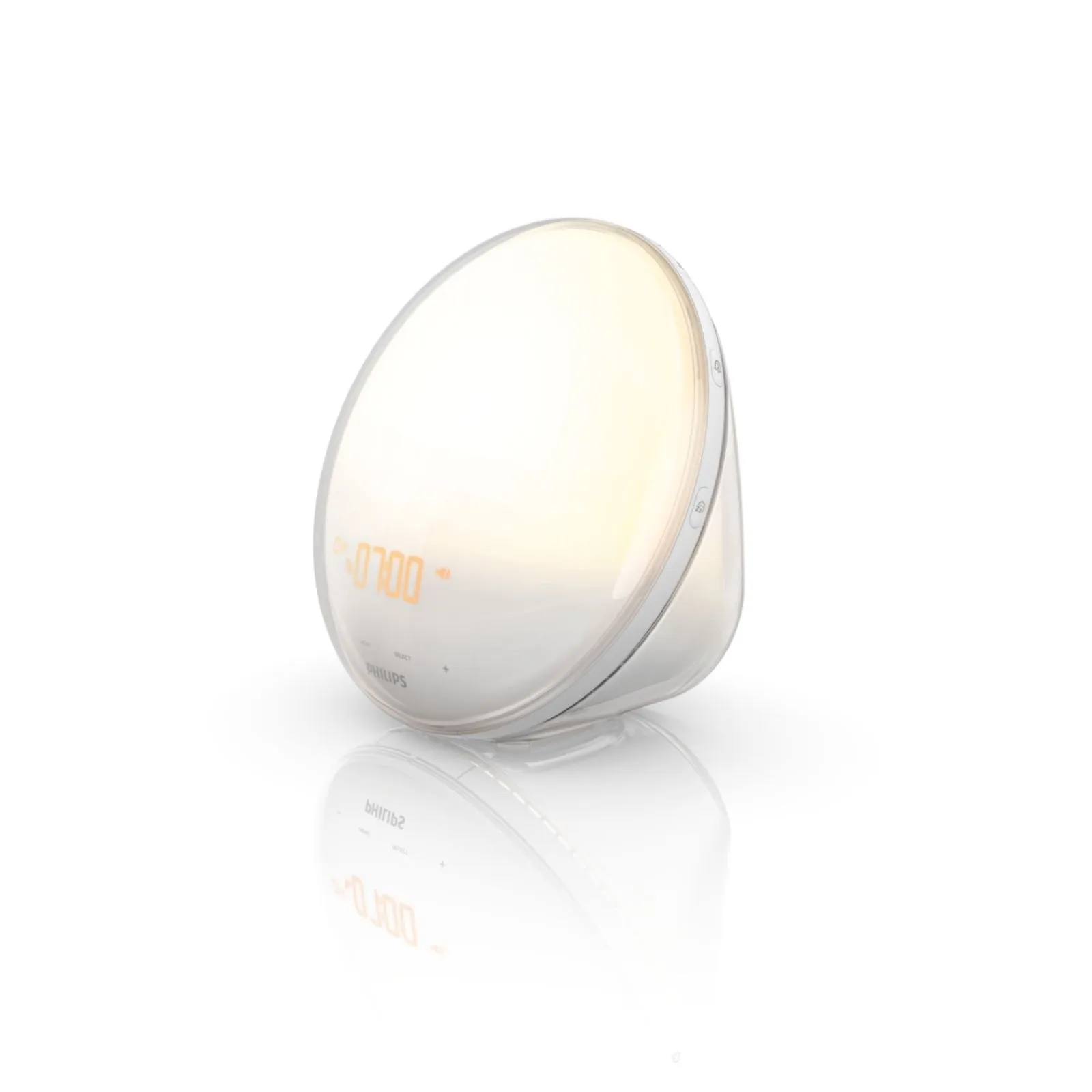
Philips SmartSleep Wake-up Light HF3520
Sunrise simulation instead of a phone alarm.
A dedicated wake-up light that simulates sunrise over 30 minutes before your alarm sounds. Narrower than the Hatch or Loftie, but simpler and needs no account.
Pros & cons
- Sunrise simulation is reported to make waking up feel noticeably less abrupt than a phone alarm
- No app, Wi-Fi, account, or subscription required to use any feature
- Doubles as a functional reading light with 20 brightness levels
- Includes FM radio, sunset-dimming wind-down, and two independent alarms
- Five built-in wake sounds, generally described as natural rather than jarring
- No smart-home connectivity or app-based scheduling
- No large sound library, guided routines, or phone charging — narrower feature set than smart alternatives
- Reported pricing has varied significantly over time; confirm current price before buying
How sunrise simulation works
According to manufacturer specifications, the HF3520 gradually brightens its light over a configurable window (up to 30 minutes) before your alarm time, simulating a sunrise, then can wake you with one of five natural sounds or FM radio. Based on user reports, the effect reliably makes waking up feel more gradual and less jarring than a phone alarm's abrupt tone.
Reading light and other functions
Beyond the wake function, the light offers 20 brightness levels, enough at full brightness to work as a genuine bedside reading lamp, plus a sunset-simulating wind-down mode, FM radio, and two independently schedulable alarms. All of this is controlled with physical buttons on the device — no app or account is involved at any point.
What it doesn't do
The HF3520 doesn't try to be a full smart sleep system. There's no white-noise sound library beyond the five built-in tones, no guided wind-down content, no phone charging, and no app-based scheduling or smart-home integration. If those features matter to you, this device will feel basic by comparison.
Who should buy it
This suits anyone who wants sunrise-based waking specifically, without adding another smart-home device, app, or subscription to their life. It's a strong single-purpose upgrade over a phone alarm for people who don't need a large sound library or bedtime routine content.
Who should skip it
If you want a genuine sound-machine library, guided sleep/wake routines, or a reading light and sunrise alarm combined with deeper customization, the Hatch Restore 2 covers more ground — at a higher price and with an app dependency. And if sunrise simulation isn't the point at all and you just want reliable white noise, the Yogasleep Dohm is simpler and cheaper.
The bottom line
A dedicated wake-up light that simulates sunrise over up to 30 minutes before your alarm, plus a usable reading light, FM radio, and natural wake sounds — with no app or account required. Narrower than the Hatch Restore 2, but simpler and needs no ongoing subscription.
Vs. closest alternative
Both simulate sunrise to soften waking up, but the Philips does it without an app, Wi-Fi, or subscription — it's a standalone bedside light with a fixed set of features. The Restore 2 does more (larger sound library, reading-light color customization, routine building) but requires the Hatch app and gates its deepest content behind Hatch+. Choose the Philips if you want sunrise simulation with zero ongoing setup or cost beyond the device; choose the Restore 2 if you want a more customizable smart bedside system and don't mind the app and optional subscription.
A polished sunrise alarm and reading light that needs no app, Wi-Fi, or subscription — narrower than a Hatch Restore, but simpler.
FAQ
Do I need an app or Wi-Fi to use the HF3520?
No. Every feature — sunrise/sunset simulation, alarms, radio, and brightness — is controlled with physical buttons on the device itself, based on manufacturer specifications. There's no companion app.
Can it charge my phone or connect to smart-home systems?
No. It has no USB charging port and no smart-home connectivity — it's a standalone bedside light and alarm, not a hub device.
How does it compare to just using a phone alarm?
Based on user reports, the gradual light increase before the alarm sound is the main advantage — reviewers commonly describe waking up feeling less abrupt and groggy than with a sudden phone alarm tone.